

Welcome back after our slightly longer than expected summer hiatus. Normally we’d have a few posts up by now, but I’ve been dealing with some family things over the past several weeks, leading up to my mom passing away this past weekend. Needless to say, I’ve been distracted. I was having a hard time coming up with something to write about. But inspiration shows up in unexpected places.
My dad passed away 12 years ago, so mom had been living alone since then. We moved into that house when I was part way through high school, and I headed off to university a couple of years later. It has always been my parents’ house more than it was ever mine. I never had much of an emotional connection to it.
A few days after mom passed, we went over to start looking for the documents you need to deal with an estate. As I was flipping through some papers in what my mom called “Grandma’s Room” — where she stored a bunch of the stuff she took from her mom’s house when my grandmother passed — something hit me. Maybe it was looking at all the things my mom saved of my Grandmother’s and realizing it was my turn to do the same for mom and dad. Whatever it was, I felt different in that house than I ever had.
That caught me off guard, and it took me a while to work out why.
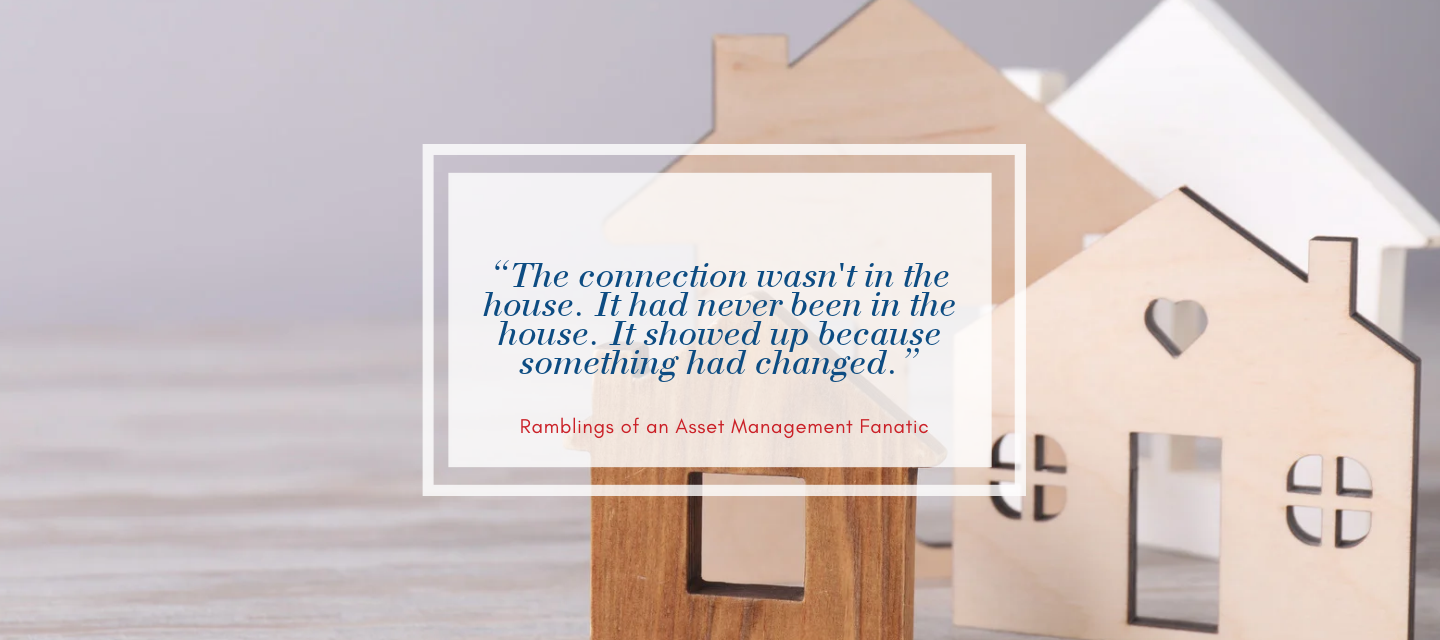
The connection wasn’t in the house. It had never been in the house. It showed up because something had changed.
I think that’s the part we miss in our work. We talk easily about how buildings matter to people — schools, hospitals, the dorm, the office where someone spent twenty years. That part is obvious enough that we nod at it and move on. What’s less obvious is that most people have no idea what a building means to them until something happens to it. The school gets consolidated. The building gets demolished, or sold, or renovated past recognition. Then it surfaces, all at once, and often in a public meeting.
We make those decisions for a living. We recommend the closure, the disposal, the replacement over the renewal. Most of the time those are the right calls, and the numbers support them. But we tend to treat the emotional response as noise in the process — something to be managed, or gotten through — when it’s actually information about what the building was doing for people that nobody wrote down anywhere.
I don’t have a tidy method for accounting for that. I’m not sure there is one. But I’ve stopped thinking of it as an obstacle to the work.
Coming back to mom’s place, I realized that even though it will always be mom and dad’s house, for a little while it was my house again too.
And that felt different.


